

When's Next Time?
7 Lessons from Workshopping a New Play

There are just some things you’ll never discover about your play sitting at your desk alone.
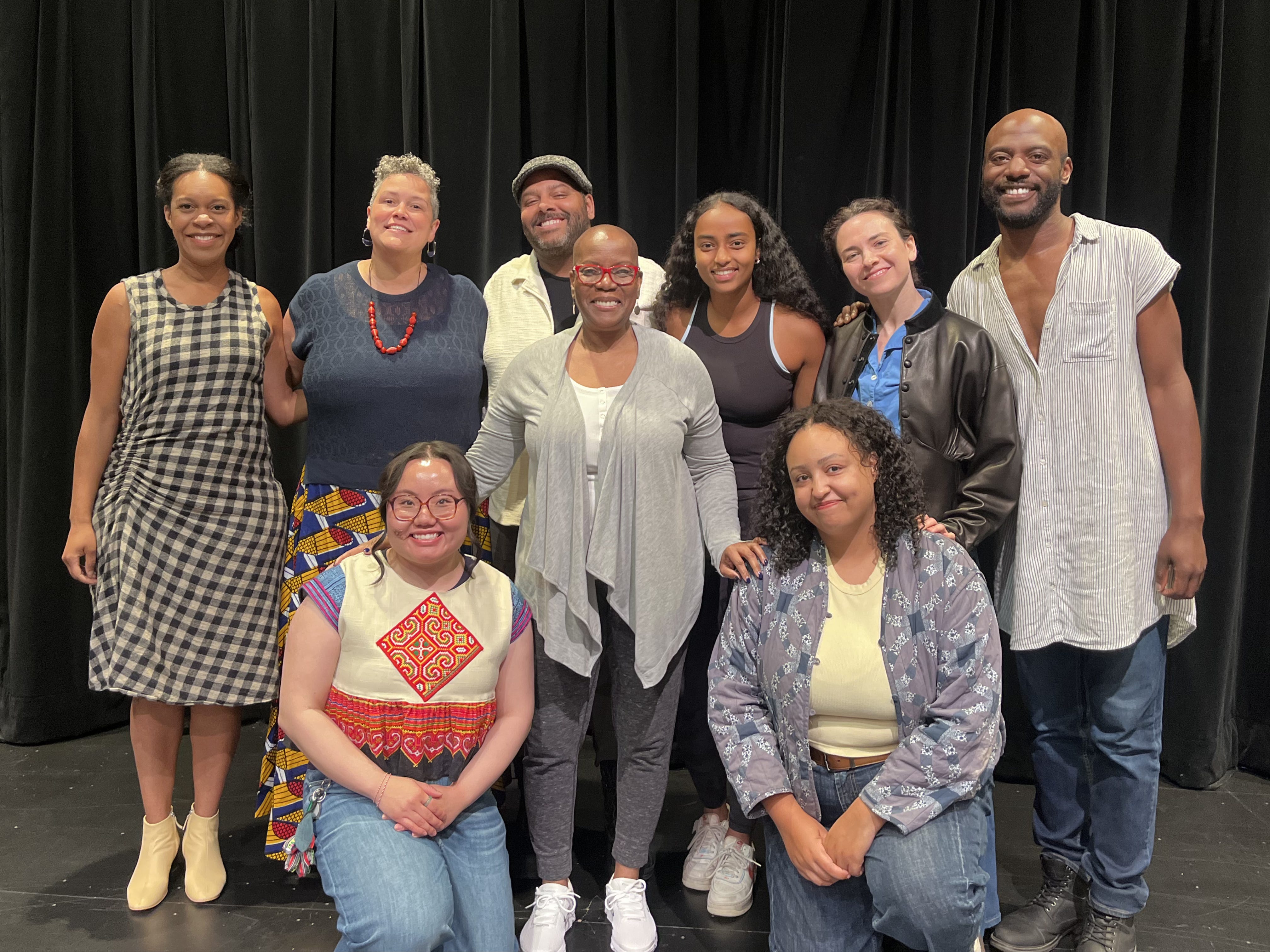
Earlier this month, I spent a week in Saint Paul, Minnesota workshopping my new play, The Quilted Heart at Playwrights’ Center. I’ve done workshops before, but this one felt different. I found myself taking bigger risks, trusting my instincts more, and leaning on collaborators in ways I never had before. By the end of the week, I’d added thirty pages, rewritten the third act, and left feeling like I’d finally begun to step into my power as a playwright. Looking back now, I think I finally understand why.
Set goals before beginning.
Coming into the process, I knew there were specific things I wanted to work on. So, my director and I beforehand and made an ambitious list of six things we wanted to tackle. That list shaped every rehearsal. No wasted time, no wandering. Instead, we structured our days and built exercises around those questions. And by the end of the process, we had figured out a brand-new song, I added several new scenes, and the play was singing in a way I’d only imagined.
Your goals can always shift, but taking the time to name them gives your workshop direction.
Take big swings.
One day during rehearsal, I turned to my director and said, “Can I ramble at you for a minute?” She agreed, and I started to lay out this wild concept for the third act that I’d been thinking about. Actually, it was about three different ideas that didn’t have a solid foundation, just intuition and theatrical vibes. I finished my diatribe with, “But I know we don’t have much time left, so I’ll probably save that for next time.” She looked at me, “When’s next time?”
Damn. She was right.
Development opportunities don’t come around often. If you’ve got an idea, if you’ve got pages, if there’s a wild concept you want to explore, DO IT.
Listen to the people, not just the text.
During rehearsal, actors, of course, shared observations about their characters (they can be your best dramaturgs!), but what I found just as valuable were moments where they simply told me how the play made them feel, what it made them grapple with. It’s some of the most generous feedback you can receive.
Listen not only to what people think about your play, but to the effect it has on them. That is the humanity in your play at work.
Think outside the box. Go beyond the page.
I had a structural issue with the play. There were three acts, three different timelines, and a few different dramaturgical/theatrical devices at work in the play. And something wasn’t working. The play didn’t move how I wanted it to. The sense of a journey wasn’t quite there.
So, we literally pulled it apart. We spread the play across the floor. We studied how it moved. We played with rearranging scenes. In a play about quilting, we were literally quilting the play together.
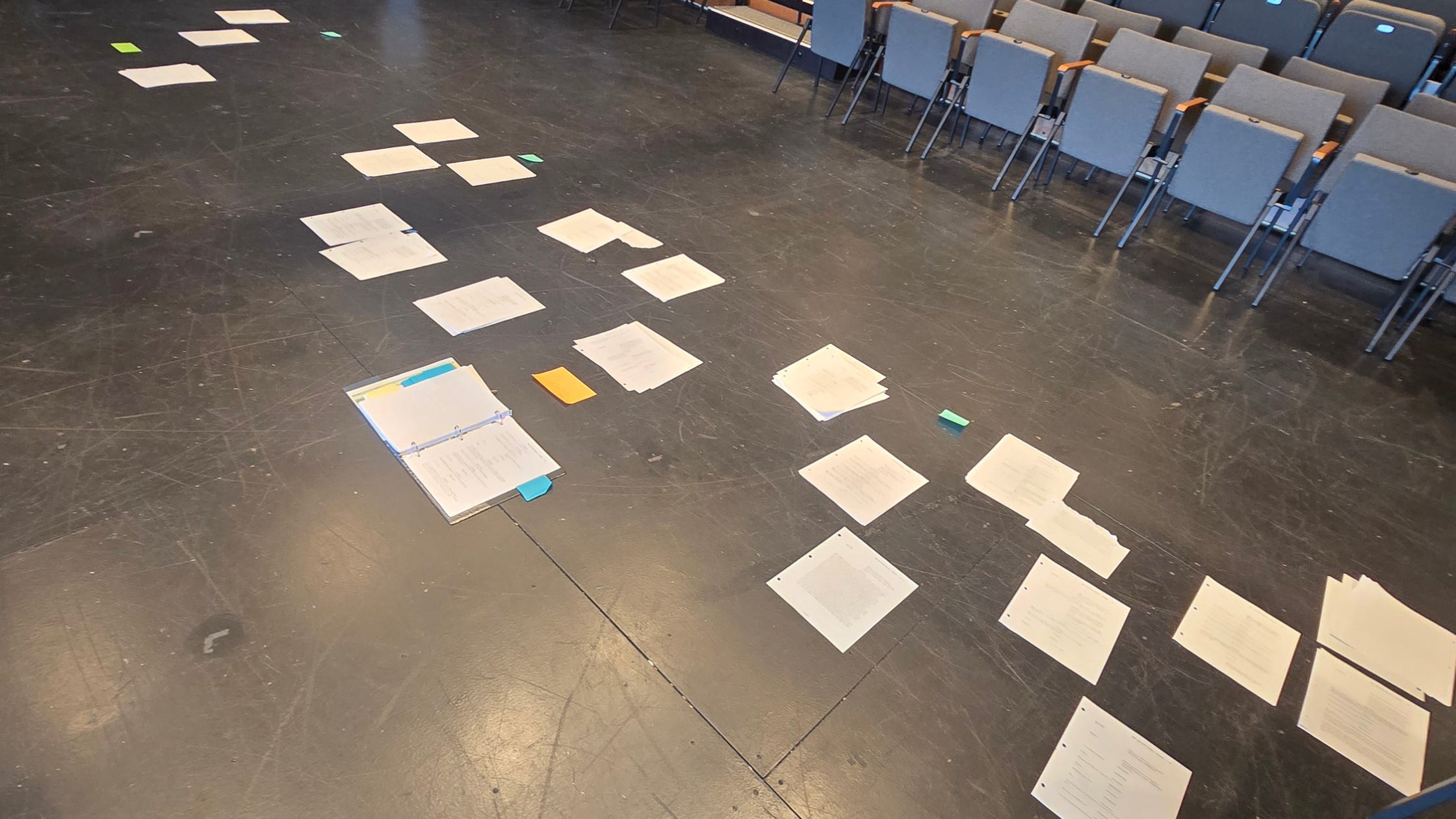
And then I noticed a break in pattern, which led me to discover:
I had the right moment…in the wrong place.
I realized that the inciting incident, which kicked off my protagonist’s journey had already been resolved halfway through the play.
So, I found the page with the moment of premature resolution, tore it in half, and moved it. All of a sudden, all the patterns worked. The play had momentum, cohesion, and the sense of a full journey. This gave me the fuel I needed to go home and rewrite a fire third act.
When a play isn’t building the way you want it to, get your hands dirty. Stop staring at pages and start looking at the whole shape. You may already have the right moments, just not in the right order.
Lean into the uncomfortable feeling.
Early on in my career, there’d be moments in a workshop when an actor’s face would scrunch up, they’d look entirely confused. They’d raise their hand and I’d break out in a cold sweat, thinking: “This is it. This is the moment that the room—nay, the entire world figures out I’m a fraud!” I saw it as a personal failing. If I was actually a good writer, there wouldn’t be any questions. Oh God, what are they gonna say that’s gonna completely break the play??
To share your writing is one of the most vulnerable human acts. But dear playwright, release yourself of having to have all the answers. And know that your story is worth telling. D’you know how precious life is?? Them people would not be here in this room right now if they really thought they were wasting their time.
Now, my favorite thing is to see a look of confusion on an actor’s face. Because what I’ve learned is that confusion isn’t some big personal failure, it’s an opportunity for clarity. It actually means so much is working that now we can go even deeper.
Don’t fear the questions. They’re often the doorway to a better play.
Make room to be inspired.
One night after rehearsal, instead of going home to write, I rallied my tired ass and went to see a new musical, My Ántonia at Theater Latté Da (it’s still running, and very good, go see it!). The show reminded me of the power and possibility of theatre, and I left energized and inspired instead of depleted. Gave me the boost I needed to go home and keep writing.
Sometimes the best thing you can do for your work is step away from it and experience someone else’s.
The Universe will work exactly how it’s supposed to.
We were scheduled to cap off the week of work with a free public reading that had long been advertised. The morning of the reading comes, and one of our actors ends up needing to go to Urgent Care (They are okay!). And we are now needing to reconsider what that day will look like. Playwrights’ Center heroes found an actor to come in with literally less than an hour notice, and the reading went off without a hitch. It truly was a beautiful event, by the way.
But what surprised me was realizing that even if the reading hadn’t happened, I still would’ve left Minnesota feeling profoundly fulfilled. It was an unforgettable week of community and art and revelations and good coffee. We used our time well. We laughed, cried, and connected. We did a lot of amazing work on a banger of a play. And that was enough.
All that to say:
Get rid of expectations. Control the work and let go of outcomes.
Big Takeaways:
Theatre doesn’t fully exist until it enters a room with other people. You can’t find your whole play sitting at your desk. This is why throughout my career, I keep returning to the phrase, “Writing can be a solitary act, but creating theatre can’t.”
Find collaborators who challenge you, delight you, nerd out with you, and care about the work as deeply as you do. When you find your people, your work will shine its brightest, it will go further, and you’ll step into the best versions of yourselves together (Shout out Signe V. Harriday!).
New works institutions are the lifeblood of theatre. As I wrap up my third year in the Core Writer Program, what becomes clearer by the day is if the theatre is to survive, and new voices are to rise to remind us what it is to be human, to fight oppressive systems, and to dream our best future, it is in no small part because of institutions that invest in playwrights and their work—particularly the unstoppable folks over at 710 Raymond Ave.
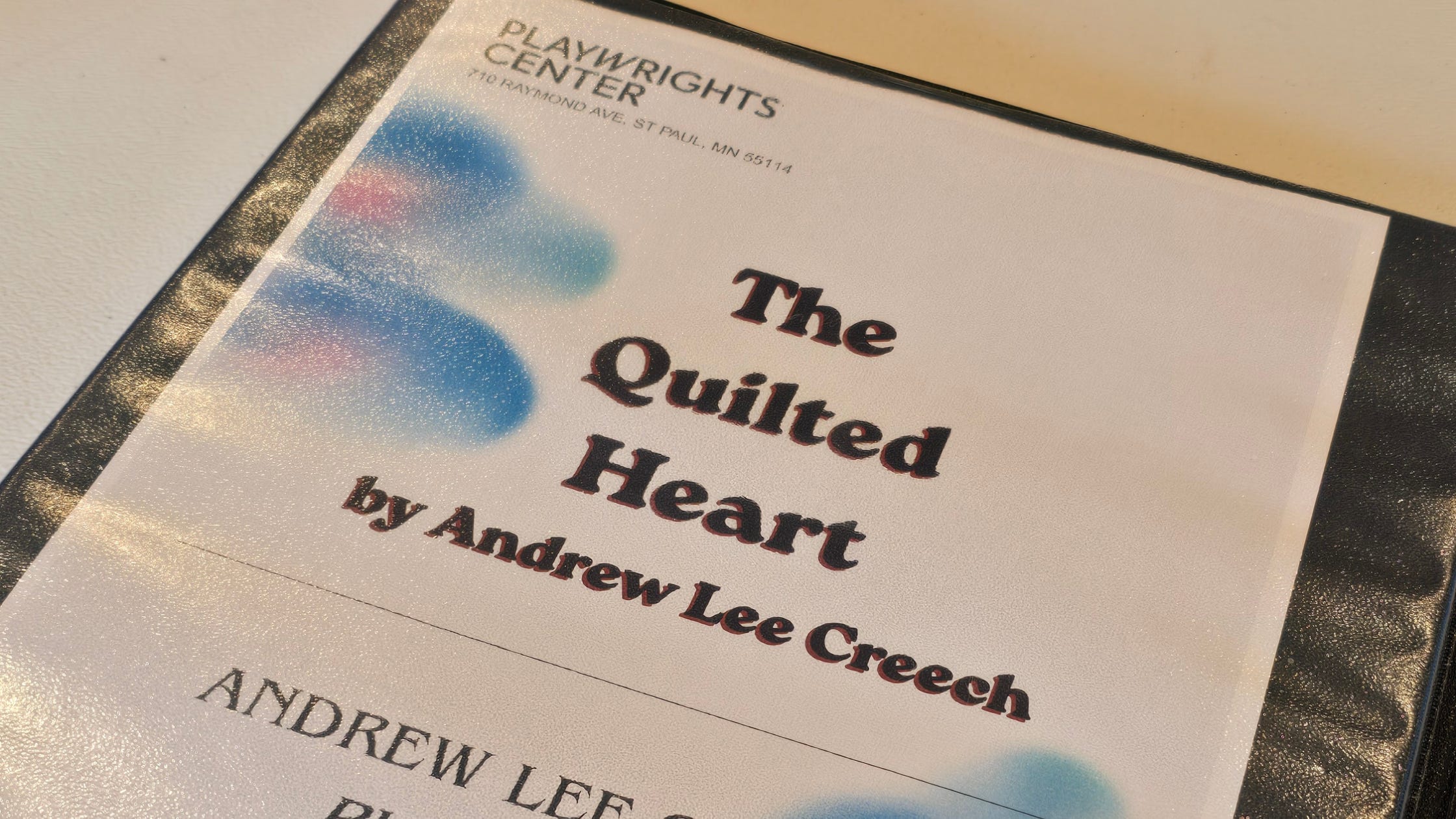
My new play The Quilted Heart is available to read on New Play Exchange.
More Articles by Andrew Lee Creech
How to Receive Feedback Without Losing Your Mind

Recently, I was given some pretty extreme, unsolicited feedback on a play of mine. Feedback that took me waaaay too long to unpack. After ten days of spiraling and working through my feelings, I finally arrived at some clarity and peace.


Really great insights!! I love collaborating and bouncing ideas off people as I’m writing, so I resonated with a lot of this. Thank you for sharing!
The concept of “even if we hadn’t presented the reading, I still would’ve felt fulfilled” is something I really connected to. Theatre in front of an audience is fantastic but getting real work done in the rehearsal room is incomparable